Use code HOLIDAY100 for $100 off Virtual Enrollment when you take advantage of this Holiday offer.
There are forces within us that do not dissolve through suppression, yet are ripe for transformation.
This retreat approaches yoginī energies directly through the disciplined frameworks of Śākta-Śaiva Tantra — working with the yoginīs as living expressions of kuṇḍalinī-śakti, each presiding over a chakra within the yogic body.
Rather than pathologizing passion or attempting to eliminate it, we will examine how Tantric traditions refine and transmute affective intensity into clarity, devotion, and awakened awareness.
The Yoginīs stand at the threshold of desire, longing, and craving. They signal intensities that can either contract the heart — or awaken it.
They do not ask us to repress passion. They reveal how passion itself can be transmuted.
Across seven days, we will engage primary texts, structured mantra practice, visualization, and embodied ritual within a coherent philosophical arc.
The focus is neither therapeutic catharsis nor abstract scholarship, but the cultivation of a dynamic relationship with transformative energy itself.
This immersion is especially suited for:
Who This Retreat Is For
Prior familiarity with mantra or meditation is helpful, but no prior study of Sanskrit or the texts we'll be exploring is required.
What Participants Say About Sādhana School Programming
"[This is for] anybody who has an interest in expanding their awareness with a really, really experienced teacher..."
“I can be in a relationship with this life and its source in a profound intimate way.”
- Ali
- Jonah
The Yoginī and the Alchemy of Rasa
In Indian aesthetic theory, powerful emotions can either bind us or liberate us. When contracted around “me” and “mine,” they harden into craving. When entered consciously, they become rasa — distilled, luminous, expansive.
The Yoginīs mark a kind of sacred performance of this transformation.
Their iconography is often fierce, with various yoginīs appearing with the heads of animals — signifying their wild emotional nature, and the untamed energies of each chakra they embody. Kubjikā, the coiled one, the kuṇḍalinī goddess, presides over the root of the subtle body; her fire rises through each successive center, and the yoginīs of those centers are her forms. Among them, Vajra-Yoginī is revered for her blazing capacity to hold a skull-cup, drinking the poisons that are offered to her as nectar — not eliminating intensity, but refining it. She metabolizes it.
Together the Yoginīs teach us how to remain present inside energies that once drove us toward grasping. In this way, devotion to the Yoginīs becomes dynamic: not worship from a distance, but participation in a transmutative drama.
The Yoginīs and the Subtle Body
In the Tantric traditions of Śākta and Śaiva yoga, the Yoginīs are not merely mythological figures — they are the living presences who govern the subtle body's chakras, each embodying a particular quality of śakti, a distinct register of consciousness and energy. The Matsyendrasaṃhitā — the 13th-century haṭha-yoga text that forms the textual core of this retreat — maps seven yoginīs onto the seven chakras. To practice with them is to become intimate with the full range of one's own energetic and emotional constitution.
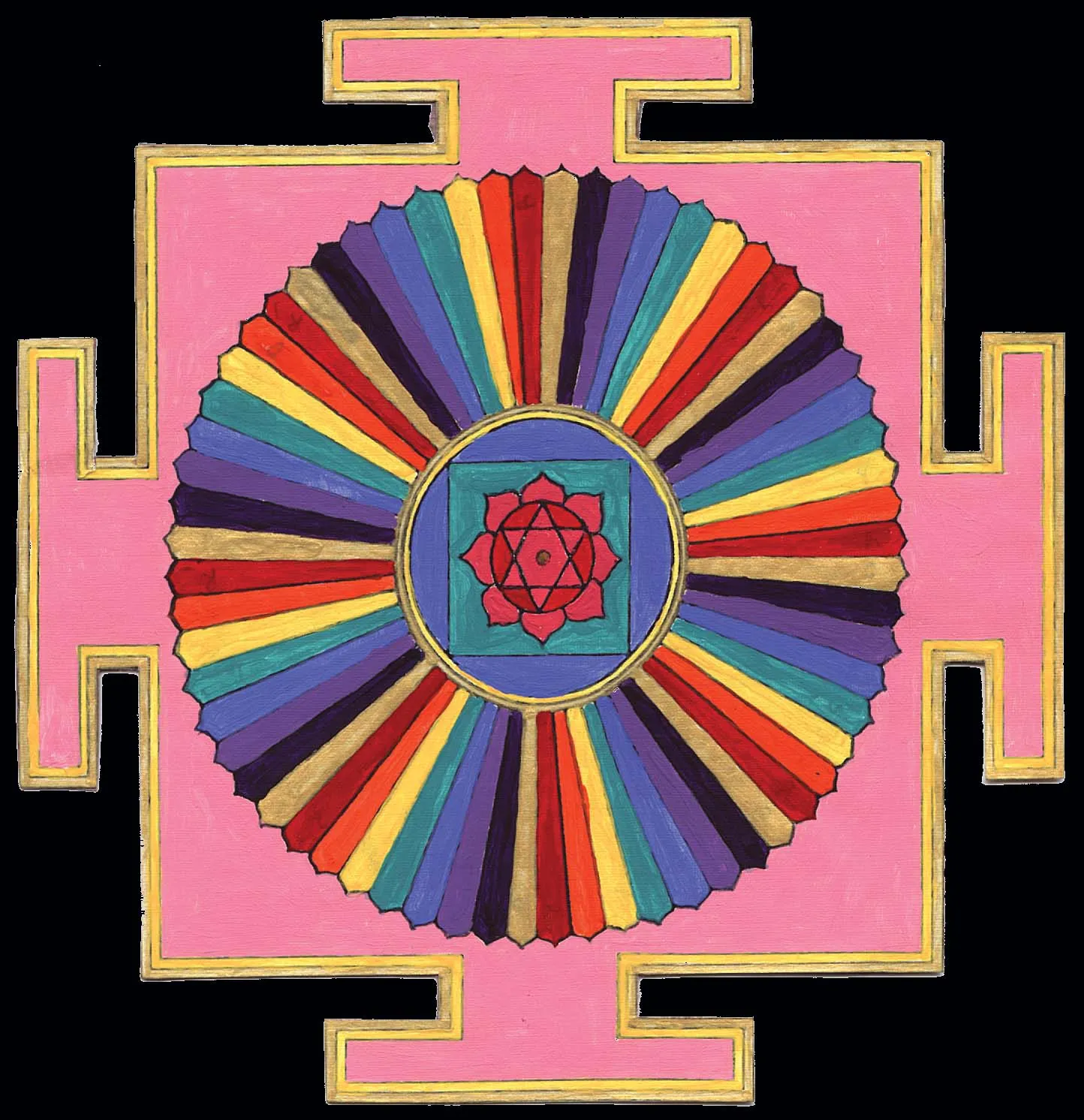
To approach the Yoginīs is to approach the subtle body as a living maṇḍala — not a map to memorize, but a field of practice to inhabit.
At the root of this system is Kubjikā — the "coiled one," identified with kuṇḍalinī-śakti herself. Her ascending movement through the chakras is the very movement of awakening, and each yoginī she passes through is a threshold of transformation. Among these fierce presences, Vajra-Yoginī holds a particular place of honor: revered at the meeting point of Śākta and Vajrayāna streams, she embodies the radical capacity to transmute desire directly into liberation. Her skull-cup — the poison drunk as nectar — makes visible what the entire yoginī maṇḍala enacts: nothing is discarded, everything becomes fuel.
In this Retreat, We Will:
Textual Grounding
This retreat is philosophically anchored without being overly academic. Material will be presented clearly, without flattening its depth.
We will draw from:
Together, these sources illuminate:
Practice Arc
Across seven days, we will move through an emergent sequence:
Daily rhythm includes:
Retreat Schedule
July 11
3:00pm MT (In-person only) - Check-In
4:30pm MT | 6:30pm ET - Opening Session and Orientation to the History & Philosophy of Yoginīs
7:30pm MT (In-person only) - Dinner
July 12-16
6:00am MT (In-person only) - Optional: guided āsana, or facilitated silence for meditation or self-movement practice
7:00am MT (In-person only) - Breakfast
8:30am MT | 10:30am ET - Morning Session (orientation + core practice instruction)
11:00am MT | 1:00pm ET - Self-guided practice / journaling / rest
12:00pm MT (In-person only) - Lunch
1:00pm MT | 3:00pm ET - Self-guided practice / walking / rest
2:00pm MT | 4:00pm ET - Afternoon Session (deepening + visualization)
5:00pm MT | 7:00pm ET - Office Hours with Jacob or Irene (announced daily) or Self-guided practice/personal time
6:30pm MT (In-person Only) - Dinner
8:00pm MT (In-person Only) - 3 Optional Evening Activities for In-Person Participants: Fireside Chats will happen 2 nights, and 1 night will be Kirtan
July 17
7:00am MT (In-person only) - Breakfast
8:30am MT | 10:30 ET - Morning Session
11:00am MT (In-person only) - Check-out
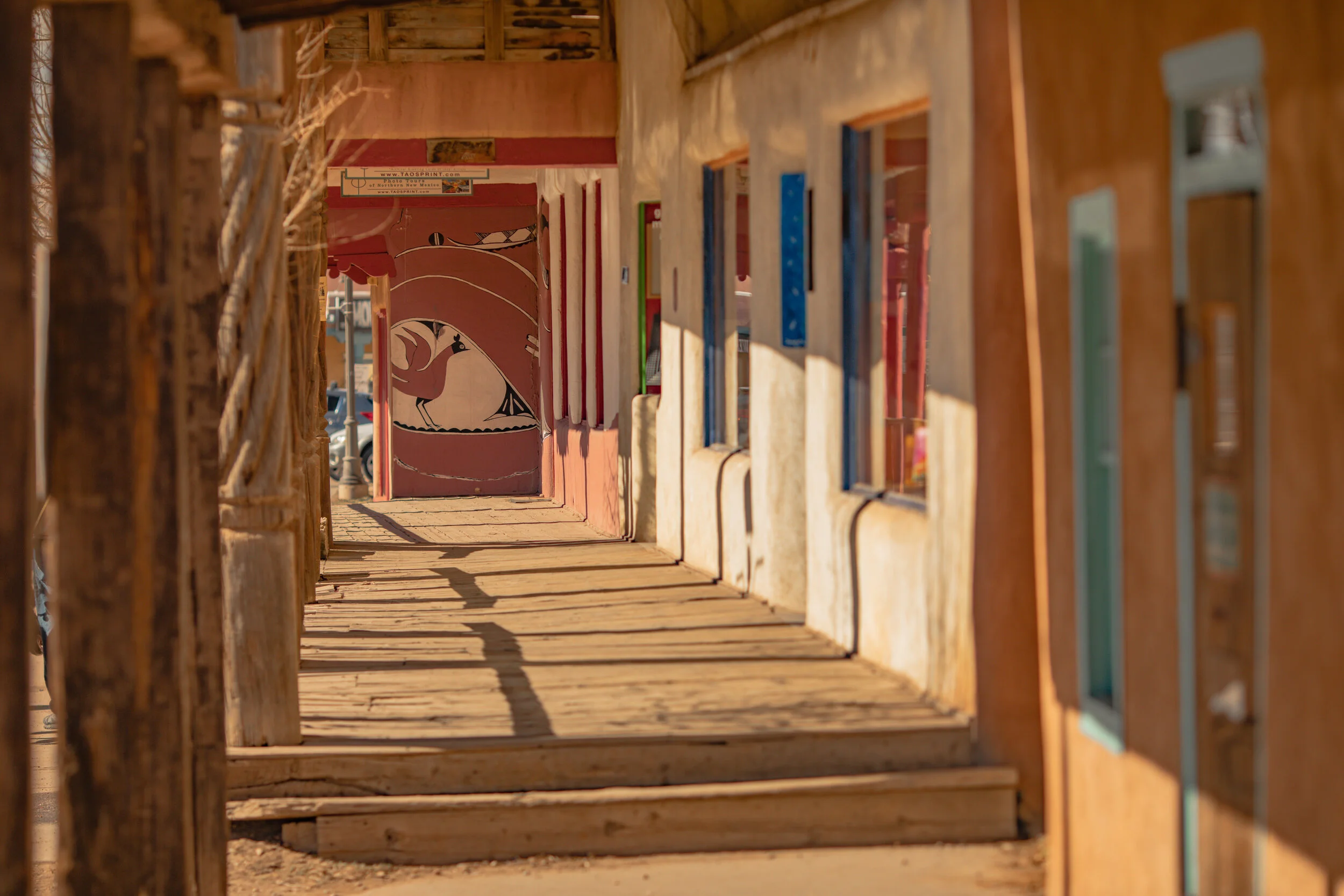
Attend in-person in Taos, New Mexico
Check-in: July 11, 3:00pm MT
Check-out: July 17, 11:00am MT
Accomodations:
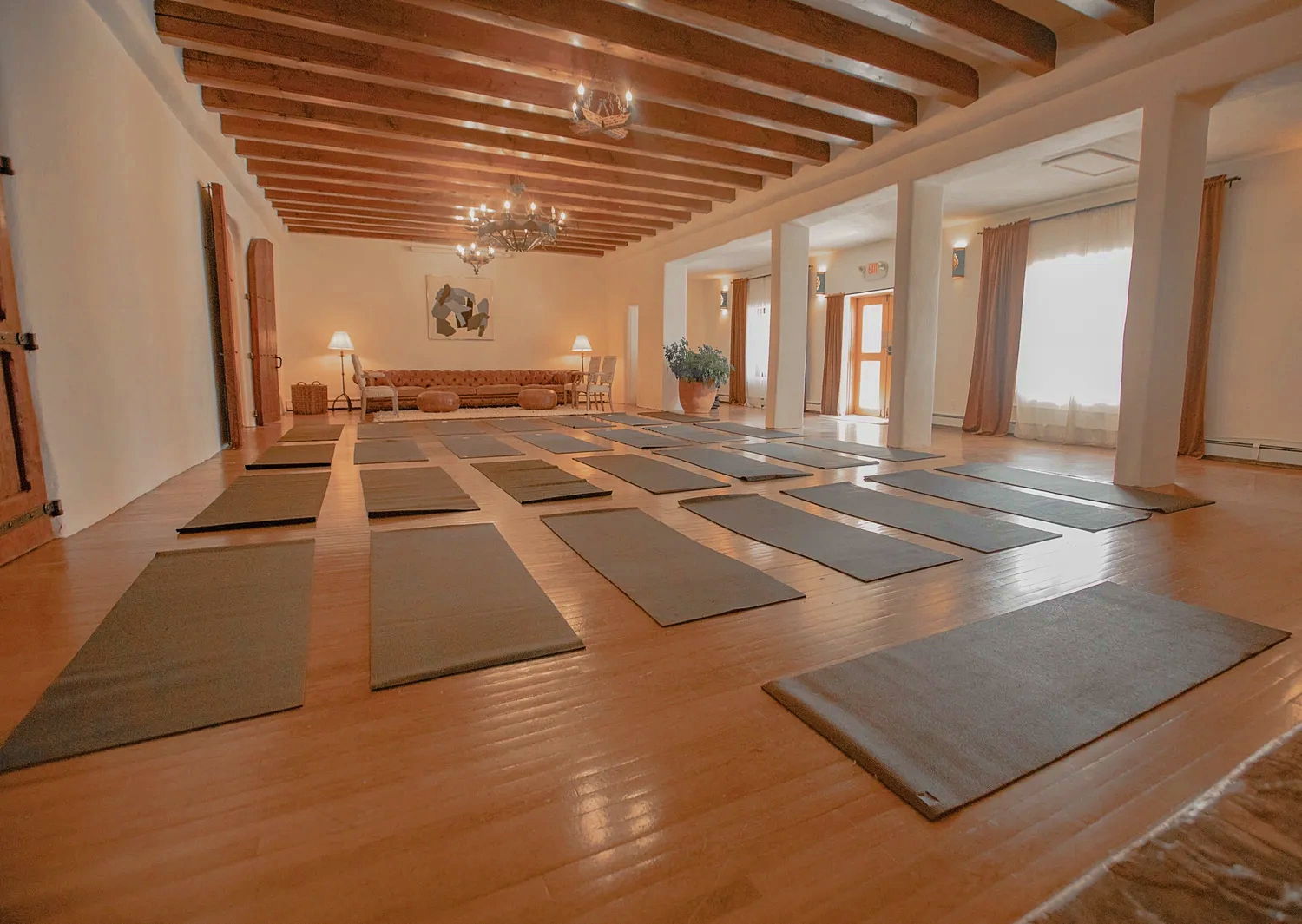
Location: Hyperslow Retreat Center at The Historic San Geronimo Lodge
A $500 non-refundable deposit secures your spot. Upon deposit, we will contact you to make your full reservation.
Private Rooms
Private rooms have a single Queen or King bed. Sharing a private room with a friend? Your +1 only pays the retreat + food fee. (Deposits must be made for all enrolling.)
Shared Rooms
Shared rooms have 2-3 beds (Twin, Queen) shared between retreaters. Accommodation preferences and bed sizes are assigned in order of registration. Shared room pricing is per person.
Jacob Kyle
Jacob Kyle is a meditation teacher, writer, philosophy educator, and the Founding Director of Embodied Philosophy. His guiding mission is to re-imagine the modern function of the yoga teacher in alignment with the teachings, texts, and traditions of yoga's profound history. He believes that by building a network of teachers who share a commitment to disseminating the deeper teachings and practices of yoga, we can build a world based on wisdom rather than ideology and divisiveness.
Jacob is a doctoral student at the University of Oxford, researching Abhinavagupta's Philosophy of Language and Meditation with advisor Diwakar Acharya. He holds an MPhil in Classical Indian Religions from Oxford (2023), an MA in Philosophy from the New School for Social Research (2017), and an MSc in Political Theory from the London School of Economics (2007). Jacob is a passionate advocate of Kashmir Śaivism and a devoted practitioner of the Śaiva-Śākta Darśana.
Teacher & Facilitator
On Demand Recording
Jacob Kyle reimagines shadow work through the lens of Pratyabhijñā philosophy in this immersive workshop, exploring how the ‘inner saboteur’ can be understood not as a fragmented part of the self, but as a shape of consciousness itself. Through teachings drawn from the Trika lineage, he unpacks key concepts such as saṅkoca, anusandhāna, and bhairavī-mudrā.
The Inner Saboteur: A Tantric Approach to Shadow Work
FREE LIVE WORKSHOP WITH PURCHASE
100% Satisfaction Guarantee
We know that you'll find this course informative, educational and inspiring.
But we want you to know that even if you don't, Course refund requests submitted within 30 days of the purchase date are fully honored. To request a refund, contact our support team at hello@embodiedphilosophy.com. We promise to have your refund issued within 5 business days.
Join us for the Summer Retreat
Join us in Taos — or step into the maṇḍala from wherever you are.
Virtual Enrollment
$397
Save 20% more when you enroll now!
7 Days of Contemplative Sādhana
Live Virtual Sessions Daily
Lifetime access to recordings + guided practices.
3 month payment plan.
Save 18% more when you enroll now.
$135
/ MONTH
Virtual Enrollment
Private Rooms: $2,149
$1,647
STARTING AT
In-Person
Enrollment
Slack community + reflection
7 Days of Contemplative Sādhana
Live Virtual Sessions Daily
Lifetime access to recordings + guided practices.
Slack community + reflection
7 Days of Contemplative Sādhana in Taos, New Mexico, USA
Lodging, meals, and retreat fee included
Lifetime access to recordings + guided practices.
Limited space available!
Regular Promo: $497
Regular Promo: $497
Secure Your Spot with a $500 (non-refundable) Deposit Now
No. Formal initiation into any specific Yoginī sādhana — including that of Vajrayoginī's — belongs within a specific initiatory context, lineage stream, and sequence of practice. In traditional Vajrayāna settings, such empowerments presuppose vows, teacher-student commitments, and a structured progression through preliminary practices. Those conditions matter, and we are not attempting to replicate or substitute for them in this retreat. Our intention is different. Rather than initiating participants into a particular lineage transmission, we will work with the teachings, principles, ritual structures, and symbolism found in Yoginī literature from the perspective of non-dual Tantric sādhana. This includes philosophical study, contemplative visualization, mantra at an appropriate level, and engagement with the aesthetic and transformative dimensions of the Yoginīs as they appear across Śākta and Vajrayāna sources. The retreat is therefore educational and contemplative, not initiatory. It is designed to deepen understanding and embodied engagement with the Yoginī’s symbolic and soteriological framework, while respecting the integrity of formal lineage-based empowerment traditions.
The practices are proportional to the context. This is a structured retreat environment, not an initiatory or high-voltage tantric intensive. The depth we pursue is informed by the safety, integrity, and pacing of the container. While we will be working conceptually and contemplatively with powerful themes — passion, craving, identity, contraction, ego-structures — the methods are scaled to support clarity rather than overwhelm. Intensity in this retreat is not theatrical or destabilizing. It arises from disciplined attention. Participants will be encouraged to remain responsive to their own constitution. A trauma-sensitive approach is foundational: no one is asked to override their nervous system, force catharsis, or push beyond what feels steady and grounded. Practices are invitational, not coercive. You will always have agency in how deeply you engage. Working with passion and craving here means observing, refining, and re-patterning attention — not reenacting psychological extremes. Dissolving "contractions," as discussed in the Tantric context, refers to loosening rigid identification, not erasing functional selfhood. The emphasis is on integration and expansion, not shock or collapse. The retreat is designed to be serious, but stable. Transformative, but contained.
Both formats offer full access to the teachings, guided practices, and textual exploration. The philosophical arc, mantra instruction, and contemplative structure are the same.
The difference lies in the field of practice.
The in-person retreat allows for immersion in a shared physical container. Practicing together — chanting in the same room, moving through ritual space collectively, holding silence in proximity — creates a density of attention that is difficult to replicate online. Subtle elements such as pacing, gesture, breath rhythm, and group resonance are felt somatically. The maṇḍala becomes not only conceptual but spatial. For some practitioners, that shared field supports greater focus and depth.
The virtual experience offers a different kind of benefit: integration within your existing life context. You engage the material in your own space, at your own rhythm, without travel demands. For many, this allows for steadier nervous system regulation and immediate application of the teachings into daily practice. The online format also makes the retreat accessible to those who cannot attend in person while still maintaining coherence and rigor.
In short, the in-person retreat emphasizes immersive collective field; the virtual retreat emphasizes accessibility and integration. Both are designed to be complete and meaningful pathways into the material.
The in-person retreat follows a steady, spacious rhythm designed to support depth without overwhelm.
Each day includes:
Two formal teaching sessions (approximately 2.5–3 hours each)
These sessions combine textual study, guided meditation, mantra practice, visualization, and structured integration. Mornings typically emphasize conceptual orientation and core practice instruction; afternoons deepen and refine what has been introduced.
Shared meals daily
Breakfast, lunch, and dinner are included. Meals function not only as nourishment but as grounding and informal integration time.
Generous self-guided practice periods
Between sessions, you will have dedicated space for personal reflection, journaling, walking, rest, or privately practicing the techniques introduced that day. This time is essential — the retreat is not designed as continuous programming, but as an alternation between structured transmission and embodied assimilation.
There may also be optional morning silence, informal evening sitting, or lightly guided integration practices depending on the day’s arc.
The overall cadence is intentional: disciplined sessions balanced by spaciousness. The goal is sustained depth across seven days, not intensity through compression.
FAQs
This retreat is an invitation to enter the maṇḍala of the Yoginīs consciously — to meet the forces that govern your subtle body, to transmute passion into clarity, and to discover that what once drove contraction can become the very radiance of liberation.
©2026 Embodied Philosophy. All rights reserved. Privacy Policy